


Detection and whole genomic characterization of <em>Bovine Papillomavirus</em> type 1 associated with severe mammary cutaneous warts in Turkey
Article Sidebar
Main Article Content
Abstract
Veterinaria México OA
ISSN: 2448-6760
Cite this as:
- Oğuzoğlu TÇ, Koç BT, Akkutay-Yoldar Z, Salar S, Baştan A. Detection and whole genomic characterization of Bovine Papillomavirus type 1 associated with severe mammary cutaneous warts in Turkey. VetMéxOA. 2019;6(3).doi: 10.22201/fmvz.24486760e.2019.3.674.
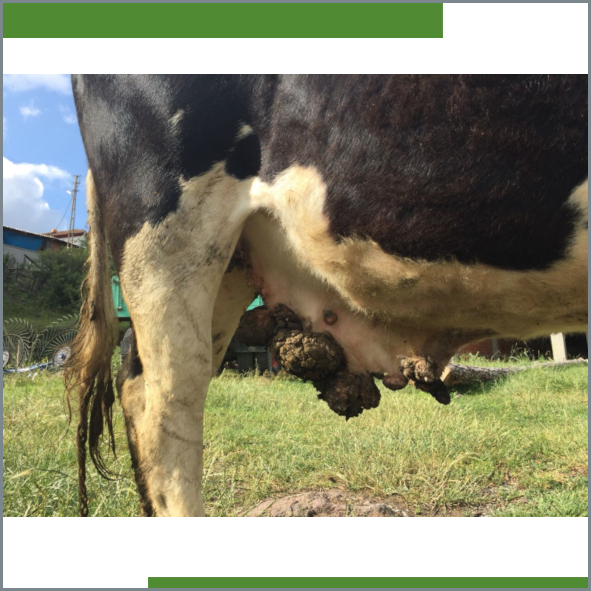
Papilloma viruses (PVs) induce epithelial tumors in their natural hosts. These tumors are located on the mammary gland of cattle; therefore, PVs are considered viral agents with significant effects, both economical and on the animals’ health. Also, knowing the diversity of bovine PV (BPV) and its prevalence in countries worldwide is important to develop optimal diagnostic methods, as well as methods to fight this infection.
The aim of the present study was to characterize the full-length genome of BPV 1 as the dominant type circulating among cattle in Turkey. It is the authors’ opinion that the results of this work provide useful information for further studies on the preventative steps that can be taken against BPV infection.
Article Details


References
Van Doorslaer K, Chen Z, Bernard HU, Chan PKS, DeSalle R, Dillner J, et al. ICTV virus taxonomy profile: papillomaviridae. J Gen Virol. 2018. http://doi: 10.1099/jgv.0.001105 DOI: https://doi.org/10.1099/jgv.0.001105
Munday JS Bovine and human papillomaviruses. A comparative review. Vet Pathol. 2014;51:1063-75. DOI: https://doi.org/10.1177/0300985814537837
Bauermann FV, Joshi LR, Mohr KA, Kutish GF, Meier P, Chase C, et al. A novel bovine papillomavirus type in the genus Dyokappapapillomavirus. Arch Virol. 2017;162:3225-8. DOI: https://doi.org/10.1007/s00705-017-3443-9
Regnard GL, Matiso A, Mounir L, Embarki T, Hitzeroth II, Rybicki EP. Complete genome sequence of bos taurus papillomavirus type 1, ısolated in Morocco. Genome Announc. 2017;5:e00979. http://doi: 10.1128/genomeA.00979-17 DOI: https://doi.org/10.1128/genomeA.00979-17
Tamura K, Stecher G, Peterson D, Filipski A, Kumar S. MEGA 6.0: Molecular Evolutionary Genetics Analysis Version 6.0. Mol Biol Evol. 2013;30:2725-9. DOI: https://doi.org/10.1093/molbev/mst197
Martin DP, Murrel B, Golden M, Khoosal A, Muhire B. RDP4: Detection and analysis of recombinant patterns in virus genomes. Virus Evolution. 2015;1(1):vev003. DOI: https://doi.org/10.1093/ve/vev003
Kumar S, Stecher G, Li M, Knyaz C, Tamura K. MEGA X: Molecular Evolutionary Genetics Analysis across Computing Platforms. Mol Biol Evol. 2018;35(6):1547-9. DOI: https://doi.org/10.1093/molbev/msy096
Benson DA, Cavanaugh M, Clark K, Karsch-Mizrachi I, Lipman DJ, Ostell J, et al. GenBank. Nucleic Acids Res. 2012;41:D36-42. DOI: https://doi.org/10.1093/nar/gks1195
Muhire BM, Varsani A, Martin DP. SDT: a virus classification tool based on pairwise sequence alignment and identity calculation. PLoS One 2014;9:e108277. http://doi.org/10.1371/journal.pone.0108277 DOI: https://doi.org/10.1371/journal.pone.0108277
Campanella JJ, Bitincka L, Smalley J. MatGAT: An application that generates similarity/identity matrices using protein or DNA sequences. BMC Bioinformatics. 2003;4:29. DOI: https://doi.org/10.1186/1471-2105-4-29
Koch C, Ramsauer AS, Drögemüller M, Ackermann M, Gerber V, Tobler K. Genomic comparison of bovine papillomavirus 1 isolates from bovine, equine and asinine lesional tissue samples. Virus Res. 2018:244;6-12. DOI: https://doi.org/10.1016/j.virusres.2017.11.005
Tan MT, Yıldırım Y, Sozmen M, Bilge Dagalp S, Yılmaz V, Kırmızıgul AH and Gokce E. A Histopathological, Immunohistochemical and Molecular Study of Cutaneous Bovine Papillomatosis. Kafkas Univ Vet Fak Derg. 2012;18:739-744. DOI: https://doi.org/10.9775/kvfd.2012.5341
Bilge-Dagalp S, Dogan F, Farzanı TA, Salar S, Baştan A. The genetic diversity of bovine papillomaviruses (BPV) from different papillomatosis cases in dairy cows in Turkey. Arch Virol. 2017;162:1507-18. DOI: https://doi.org/10.1007/s00705-017-3258-8
Bocaneti F, Altamura G, Corteggio A, Velescu E, Roperto F, Borzacchiello G. Bo¬vine papillomavirus: new ınsights into an old disease. Transbound Emerg Dis. 2016;63:14-23. http://doi: 10.1111/tbed.12222 DOI: https://doi.org/10.1111/tbed.12222
Antonsson A, Hansson BG. Healthy skin of many animal species harbors pap¬illomaviruses which are closely related to their human counterparts. J Virol. 2002;76:12537-42. DOI: https://doi.org/10.1128/JVI.76.24.12537-12542.2002
Maeda Y, Shibahara T, Wada Y, Kadota K, Kanno T, Uchida I, et al. An outbreak of teat papillomatosis in cattle caused by bovine papilloma virus (BPV) type 6 and unclassified BPVs. Vet Microbiol. 2007;121:242-8. DOI: https://doi.org/10.1016/j.vetmic.2006.12.015
He Z, Meng Q, Qiao J, Peng Y, Xie K, Liu Y, et al. Mixed Nipple Infections Caused by Variant of BPV3 and a Putative New Subtype of BPV in Cattle. Transbound Emerg Dis. 2016;63:e140. http://doi: 10.1111/tbed.12238 DOI: https://doi.org/10.1111/tbed.12238
Forslund O, Antonsson A, Stenquist B, Göran Hansson B and Nordin P. A broad range of human papillomavirus types detected with a general PCR meth¬od suitable for analysis of cutaneous tumours and normal skin. J Gen Virol. 1999;80:2437-43. DOI: https://doi.org/10.1099/0022-1317-80-9-2437
Manos MM, Ting Y, Wright D, Lewis J, Broker TR, Wolinsky SM. Use of PCR amplification for the detection of genital human papillomaviruses. Cancer Cells. 1989;7:209-14.
de Villiers EM, Fauquet C, Broker TR, Bernard HU, zur Hausen H. Classification of papillomaviruses. Virology. 2004;324:17-27. DOI: https://doi.org/10.1016/j.virol.2004.03.033
Carvalho Carvalho R, Sakata S, Giovanni D, Mori E, Brandão P, Richtzenhain L, Pozzi C, Arcaro J, Miranda M, Mazzuchellide-Souza J, et al. Bovine papillo¬mavirus in Brazil: Detection of coinfection of unusual types by a PCR-RFLP method. Biomed Res Int 2013; Article ID 270898, 7 pages http://dx.doi. org/10.1155/2013/270898 DOI: https://doi.org/10.1155/2013/270898
Liu Y, Pan Y, Gao W, Ke Y, Lu Z. Whole-genome analysis of human papillomavirus types 16, 18, and 58 isolated from cervical precancer and cancer samples in Chinese women. Scientific Reports. 2017;7(1):263. DOI: https://doi.org/10.1038/s41598-017-00364-9
License

Veterinaria México OA by Facultad de Medicina Veterinaria y Zootecnia - Universidad Nacional Autónoma de México is licensed under a Creative Commons Attribution 4.0 International Licence.
Based on a work at http://www.revistas.unam.mx
- All articles in Veterinaria México OA re published under the Creative Commons Attribution 4.0 Unported (CC-BY 4.0). With this license, authors retain copyright but allow any user to share, copy, distribute, transmit, adapt and make commercial use of the work, without needing to provide additional permission as long as appropriate attribution is made to the original author or source.
- By using this license, all Veterinaria México OAarticles meet or exceed all funder and institutional requirements for being considered Open Access.
- Authors cannot use copyrighted material within their article unless that material has also been made available under a similarly liberal license.